Sign up free — 100 credits, no card

AI Story Continuer

Most AI story continuers write the next page of text. This one starts the next episode: the same cast, the same places and the same look, picking up where the last scene ended and carrying on to a storyboard and video you can approve before the video stage spends credits.

Video
How It Works

Key Features

01

The next episode, not the next paragraph

Ask for the next episode and Reelfo writes a new script from the last one: its ending, its cast, and where everyone stood and what they held at the last beat. What comes out is a script, a storyboard and shots, not a page of prose.

02

The same cast and places

The approved characters, locations, props and style are reused, not redesigned, unless you ask for a change. A character you approved in episode one is the character in episode two.

03

A hook, and a new open question

Each new episode is written to open on the question the last one left, and to end on a new one instead of closing everything. You can read both before anything is drawn and change them by typing.

Two things people mean by a story continuer

The first kind of story continuer takes a passage you paste and writes what comes next, in words. It is quick, it is useful when you are stuck, and for a lot of writing it is all you need.

The second kind is for people making a series. For them, continuing a story means the same people look the same, the rooms are still the rooms, and the new episode starts where the last one stopped. Text alone cannot hold that, because a description of a character is not a face. A continuation has to carry pictures and notes about what happened, not just the last paragraph.

This page is about the second kind. Reelfo does not write prose chapters. A continuation here is a script, a storyboard and shots, and, when you choose, video clips cut into an episode.
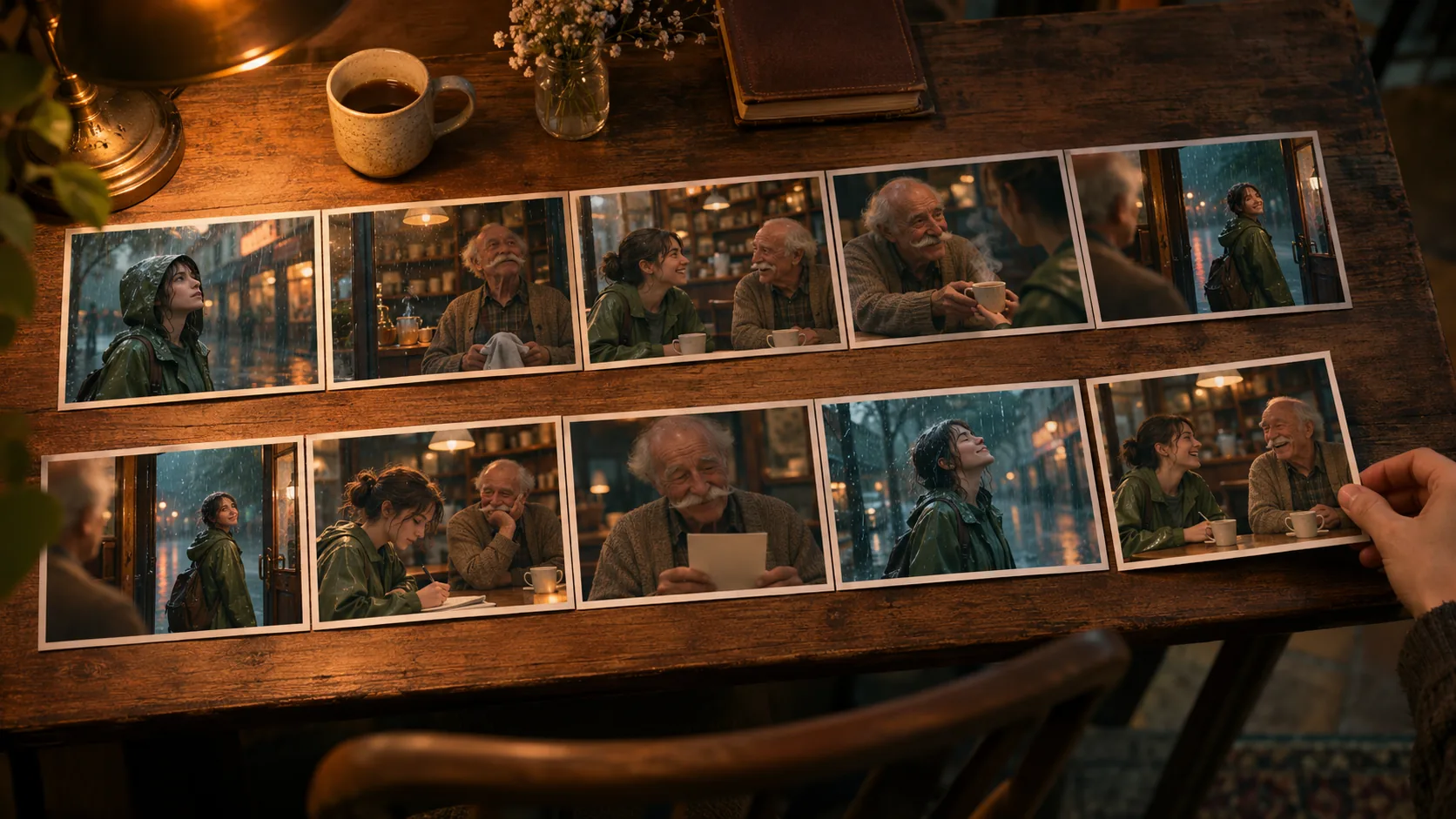
How the next episode is made

You ask for it in the chat: “next episode”, “Part 2”, or 下一集. A bare “continue” after a finished film means keep going with this episode, not start another one, because a new episode is paid for again.

  1. 1
    The last episode is read

    The agent reads the previous episode’s script: its title, its ending, its cast, its last pages, and where its last beat left everyone, including what each character was holding. If the film was rendered, its final frame is carried over too.

  2. 2
    The approved assets carry over

    The characters, locations, props and visual style you approved are reused as they are. They are not redesigned unless you ask, so you do not pay to draw the same character twice.

  3. 3
    The next brief is written

    The brief holds a recap of the last episode, genre, tone, the lead and the look from the episode before, and anything you said you want from this one, in your words. It also holds a hook that picks up the last episode’s open question and an ending that leaves a new one. The last episode’s length carries over unless you set another.

  4. 4
    Script and storyboard

    From here it is the same pipeline as episode one: the script, then the storyboard and the shots. Each stage is something you read and can change before the next one is paid for.

  5. 5
    Video, when you decide

    The next episode does not wait for a rendered film. A written, confirmed script or storyboard of the last episode is enough to start the next, so you can plan Part 2 before you pay for Part 1’s video. The video stage shows its price before it spends anything.

What carries over and what is decided again

A continuation reuses what you already approved and writes only what is new. This is what moves from one episode to the next.

WhatCarried over from the last episodeDecided for the new episode
Characters, places, props, styleThe approved library, reused as it isNothing is redrawn unless you ask for a change
Where it startsHow everyone stood and what they held at the last beat, and the final frame if the film was renderedThe new episode’s first scene
The open questionThe question the last episode left openA new one, left open by this episode’s ending
LengthThe last episode’s lengthYour own target in seconds, if you set one
CostNo discount for continuing: a new episode is paid for againPriced like any episode; the video stage shows its price first

Read from how the next-episode step works in the agent, not from marketing copy.

Continuing a script you wrote

If the story already exists as a long script, upload it. Reelfo splits an uploaded script into episodes, by its own markers such as “Episode 3” or 第3集 when it has them and along natural boundaries when it does not.

The next episode is then seeded with that episode’s own source text, and the instruction is to adapt it faithfully rather than invent a different plot. When the agent needs a detail from earlier in your script, such as a backstory or a callback, it can look the passage up instead of guessing.

This is the one case where the continuation is yours, not Reelfo’s. When the story is made in Reelfo, the agent writes the next episode itself, from the last one.

What it does not do

It does not write the next chapter of a novel in prose, and it does not start a new episode on its own. A clip is a few seconds, and an episode is a sequence of shots cut together, not one unbroken take.

Continuity is carried by the approved images and by the notes on how the last episode ended. A model can still get a detail wrong, which is why every stage is something you can read before the next one is paid for, and why a character you approved is edited in place rather than redrawn from scratch.

Trying it free, and what a new episode costs

Signing up puts 100 credits in your account, once, with no card. For a typical short story that is enough to go from your idea to a storyboard — the story brief, the script, the cast images and the shot plan — or, if you would rather, about 16 images in the image studio. A longer script or a bigger cast can use it up first, and the video itself is bought with credits.

A continued episode costs what an episode costs, since a new episode is paid for again; a credit is $0.0025 at the Starter rate. The grant does not renew, so the free start covers the first story and a first look at the second, and the video itself is bought with credits.

Reelfo does not stamp a watermark on anything it renders. The compose step copies the video stream through untouched — there is no overlay filter in the pipeline to apply one.

FAQ

Frequently Asked Questions

Related

You might also like

Start creating today

Sign in and your first 100 credits are already there — no card needed.

AI Story Continuer — Write the Next Episode, Then Film It | Reelfo